Designing Our Way Forward: Why the Double Diamond Anchors PeerSphere in 2025-26
We’ve redesigned PeerSphere communities around the Systemic Design Framework with the double diamond at the core so every member moves from real problems to small tests to visible impact. Shorter, more focused sessions. Simple tools. Clear follow‑through.
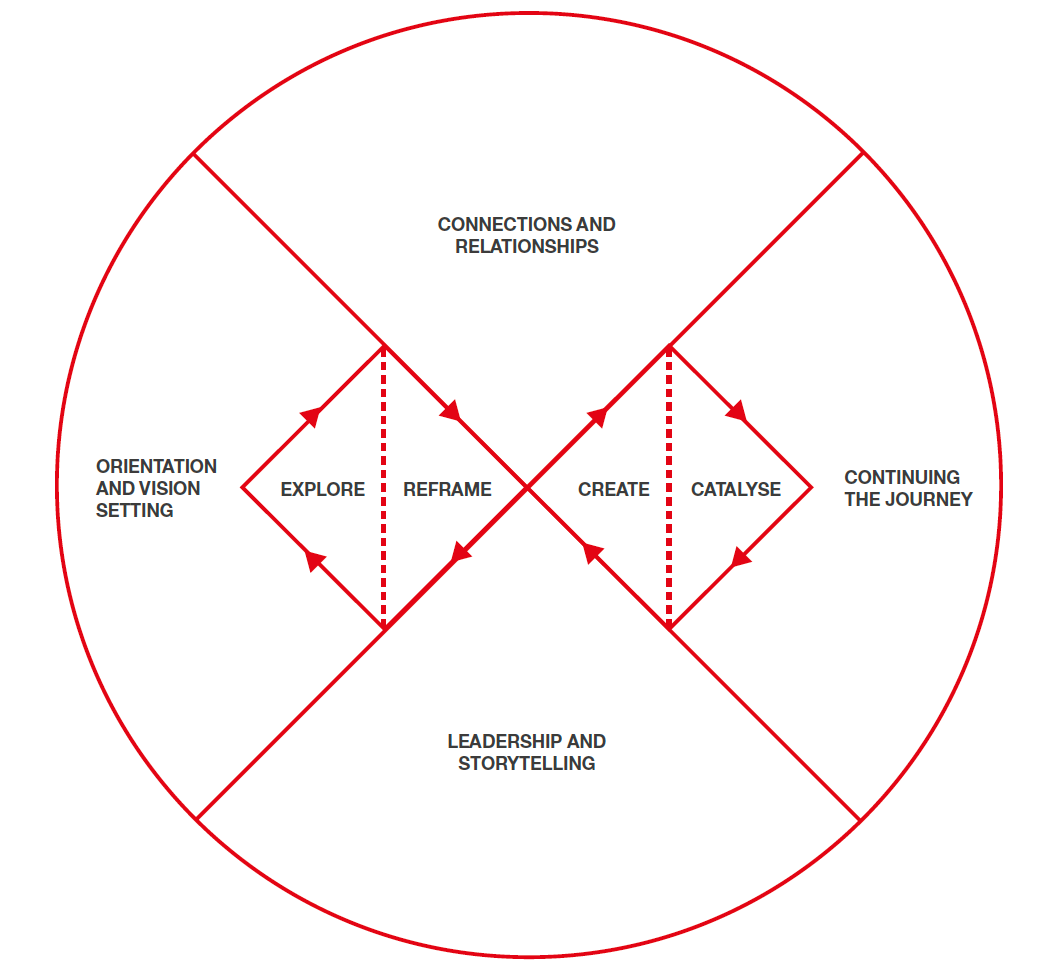
The Systemic Design Framework and Toolkit by the Design Council is licensed under a CC BY 4.0 license.
Why we redesigned our communities
Over the past year we kept hearing a theme: “We love the conversations but help us turn them into action.” The double diamond gives our peer learning a simple, shared pathway so social learning can flourish and lead to improvement in our schools.
How the double diamond works:
The double diamond isn’t a buzzword, it’s a tried and tested way of starting with understanding the needs of people (empathy) before finding solutions: first find the right problem, then shape the right response.
Here’s how that maps to PeerSphere’s four‑session cycle:
Session 1 — Explore → Reframe
Surface many challenges, cluster them, and draft tight problem statements. If time allows, we probe root causes (5 Whys or a simple fishbone). The goal is clarity, not a giant to‑do list.Sessions 2–3 — Create
Brainstorm practical options to solve the problem, then a quick Gap Analysis to shape the plans for a test. Something small and practical.Session 4 — Catalyse
If you ran a test, share what you tried, what happened, and any metrics you tracked. Peers give supportive feedback. Everyone leaves with concrete steps – Momentum over perfection.
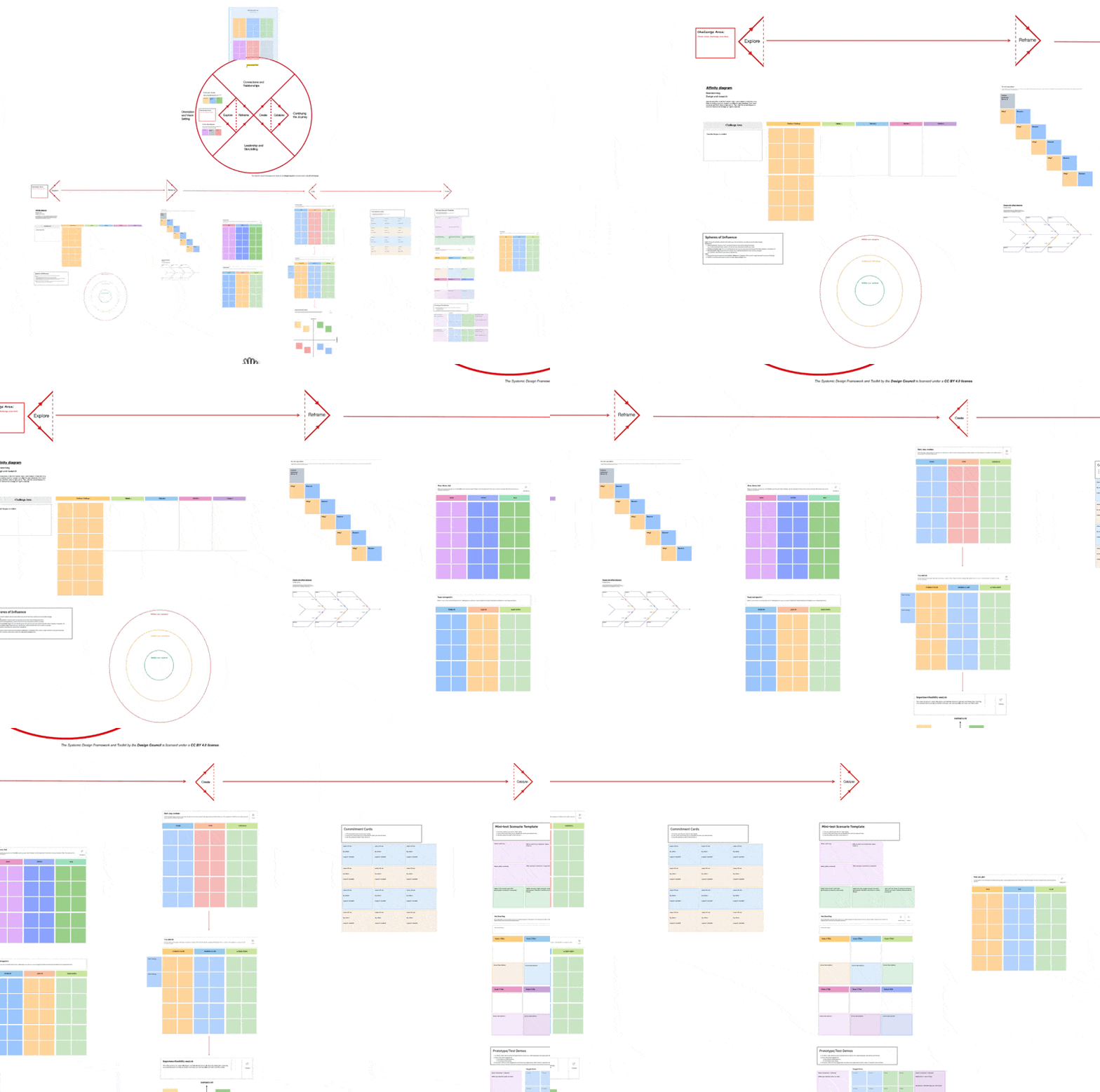
And that’s not the end! If you want to, you can continue to test and improve your solution with your affinity group or 1-1 with a peer mentoring pair between January to April. We know that learning doesn’t fit neatly into 4 live sessions so we’ve built an ecosystem that adapts to your needs.
Why design thinking starts with problems (not ideas)
Two reasons guide our approach:
Clarity is rare and valuable. We all have problems in our day‑to‑day work, but we rarely slow down to define them well. A clear problem statement channels good ideas, a fuzzy one wastes energy.
Complexity favours grounded problems over shiny ideas. If we chase abstract “opportunities” that aren’t grounded in lived experience, we’re often building a castle on sand. The double diamond resists that urge: Try to ‘see the system’, then focus on improvements resting on solid foundations that actually improve practice in schools.
What you’ll experience this year
Short, structured sessions (typically 60 minutes) where tailored protocols do the heavy lifting.
Templates that make your thinking visible: clustering, problem statements, Stop–Start–Continue, Gap Analysis, Mini Test Plan, Lightning Demo, Commitment Cards.
Support on tap: Hosts guide the flow; Tech Assistants handle issues during calls.
How to plug in this month
Complete your onboarding tasks: Such as RSVP for Ignite Week (16–18 September), update your profile, and set one personal goal for the year.
Bring one real challenge to Session 1. Something from your classroom, team, or role.
If you’re a returning member, invite a colleague who’ll benefit from focused peer learning.
PeerSphere has always been about people learning from people. The double diamond gives it a clearer structure that turns talk into action, and action into impact. See you in Session 1!